
Longevity, Sardinia and the Forgotten Role of Minerals in Water
I recently attended the Milan Longevity Summit for the first time.
What struck me immediately was not only the quality of the science, but the tone of the event itself.
The Summit welcomed participants into the “longevity conversation.” I liked that expression. Because longevity is no longer a niche scientific topic. It is becoming one of the defining conversations of our century:
how we age,
how we preserve health,
and how societies can remain healthy as populations grow older.
As the founder of Aqvita, I attended the summit with a deep curiosity.
For years, I have been convinced that water and minerals are underestimated in preventive health. My interest originally came from engineering and from a fascination with how nature creates mineral-rich waters through geology.
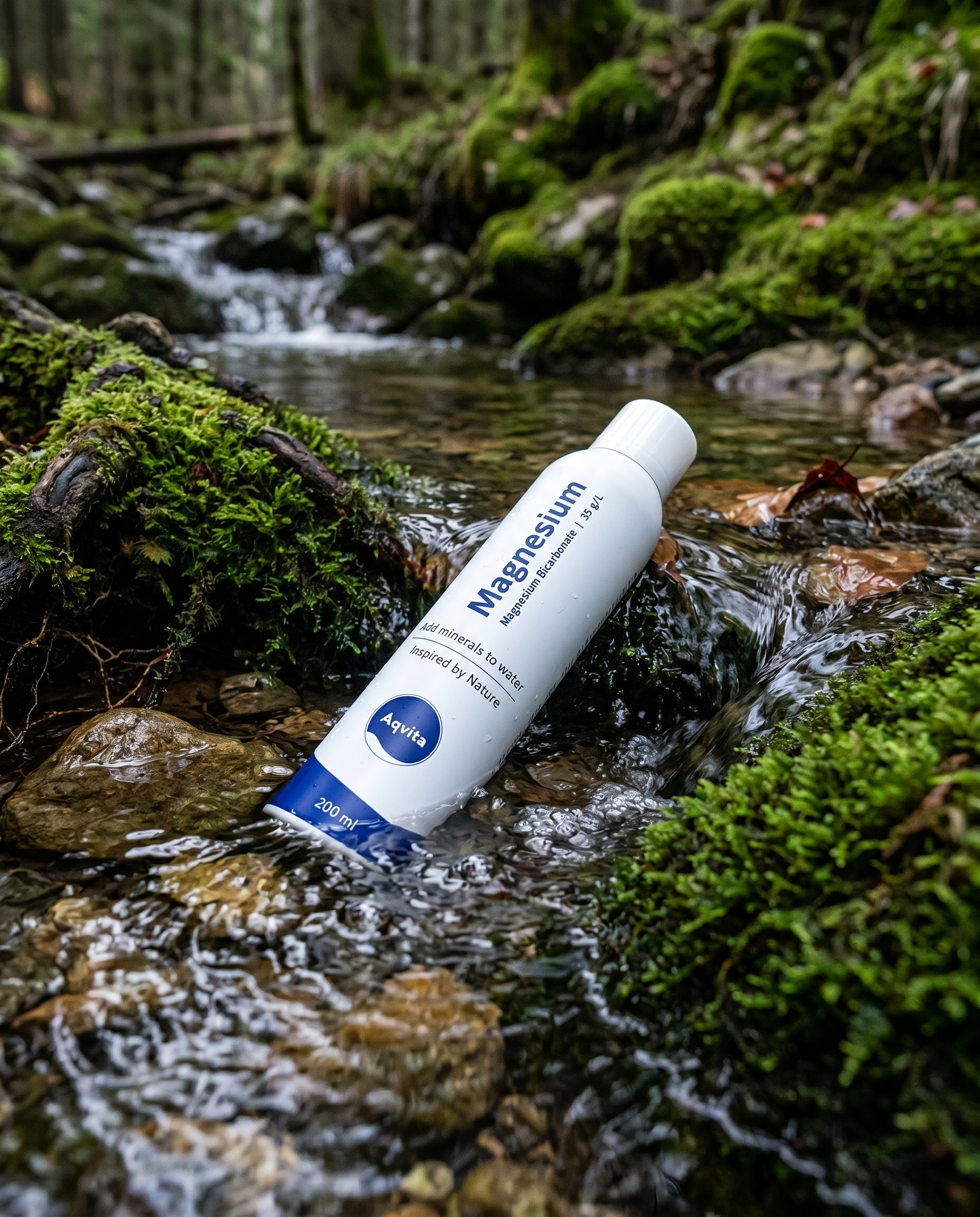
But during the summit, I realized something important: Aqvita may have a meaningful contribution to bring to the longevity conversation itself.
The Moment That Changed My Perspective
One presentation especially stayed with me.
Professor Jay Olshansky from the University of Chicago compared the historical “Blue Zones” — regions known for exceptional longevity such as Sardinia, Okinawa and Nicoya.
But his message was not romantic. It was almost the opposite. Most Blue Zones, he showed with diagrams, have progressively lost many of their original longevity characteristics.
Urbanization changed them.
Food systems changed.
Lifestyle changed.
Metabolic disease increased.
The original environmental conditions faded.
And then came the remarkable point: Sardinia appears to be the only truly Blue Zone remaining. That observation stayed with me long after the session ended. Because Sardinia is not only preserving a traditional lifestyle. It is also preserving a geological environment. And that changes the conversation entirely.
The Missing Variable: Water
Most longevity discussions focus on:
nutrition,
movement,
genetics,
social structure,
fasting,
or advanced medicine.
But surprisingly little attention is given to the mineral composition of water. Historically, humans did not drink ultra-purified water stripped of minerals. They drank spring waters naturally enriched through contact with rocks over long geological timescales.
In Sardinia, many traditional waters are naturally rich in:
calcium,
magnesium,
and bicarbonates.
And remarkably, science increasingly suggests this matters. A study published in Nutrients analyzed the mineral composition of spring waters across 377 Sardinian municipalities and compared it with cardiovascular mortality.
The findings were striking:
municipalities consuming calcium-rich waters showed significantly lower mortality from coronary artery disease,
magnesium showed similar protective trends,
and bicarbonate-rich waters also appeared associated with healthier cardiovascular outcomes.
The researchers explicitly connected these mineral-rich waters with Sardinian longevity regions themselves. This is not a wellness trend or marketing narrative. It is part of a growing scientific body of evidence suggesting that mineral-balanced water may play a far more important role in long-term human health than previously assumed.
Water Is Not Just Hydration
What fascinated me most is that water may be one of the most continuous biological exposures of human life.
Every day.
From childhood to old age.
For decades.
Unlike supplements, water is infrastructural.
It accompanies every metabolic process continuously across the lifespan. This makes the mineral composition of water fundamentally different from occasional nutritional interventions.
And yet modern society increasingly consumes water that has been heavily purified, desalinated or demineralized. Ironically, as technology advanced, we may also have moved further away from the mineral environments humans evolved with.
Why Bicarbonates Matter
One aspect of the Nutrients paper on Sardinia particularly resonated with me personally. The study points repeatedly toward the role of bicarbonate-rich waters. This is important because most modern mineral supplementation systems rely on chlorides, sulfates or generic electrolyte powders.
Nature does not work that way.
Many natural longevity waters are based on bicarbonate chemistry created through geological interactions between water, minerals and CO₂.
This idea has been central to Aqvita from the beginning. Our patented technologies are based on stabilized bicarbonate mineralization inspired by natural spring waters.
Not because bicarbonates are fashionable.
But because nature itself repeatedly points in that direction.
A New Frontier in Longevity
The longevity field often focuses on advanced therapies like AI, pharmaceuticals, biomarkers, gene therapies. These are important.
But after attending the Milan Longevity Summit, I left convinced that another frontier deserves a place in the conversation: the rebuilding of healthier drinking water.
The surviving resilience of Sardinia may not only come from culture or genetics.
It may also come from decades of continuous interaction between human biology and naturally mineral-balanced waters.
This does not reduce longevity to a single factor.
But it strongly suggests that water deserves to move from the background of health discussions to a far more central position.
For me, this summit was a confirmation that Aqvita is not simply working on water innovation. We are participating in a much larger conversation about the future of preventive health, metabolic resilience and healthy ageing.
And increasingly, science suggests that the minerals dissolved in water are part of that story.
References
Dore MP, Parodi G, Portoghese M, Errigo A, Pes GM. Water Quality and Mortality from Coronary Artery Disease in Sardinia: A Geospatial Analysis. Nutrients. 2021;13(8):2858.
https://doi.org/10.3390/nu13082858Catling LA, Abubakar I, Lake IR, Swift L, Hunter PR. A systematic review of analytical observational studies investigating the association between cardiovascular disease and drinking water hardness. Journal of Water and Health. 2008;6(4):433–442.
https://doi.org/10.2166/wh.2008.054Sauvant MP, Pepin D. Drinking water and cardiovascular disease. Food and Chemical Toxicology. 2002;40(10):1311–1325.
https://doi.org/10.1016/S0278-6915(02)00096-9Yang CY, Chang CC, Tsai SS, Chiu HF. Calcium and magnesium in drinking water and risk of death from acute myocardial infarction in Taiwan. Environmental Research. 2006;101(3):407–411.
https://doi.org/10.1016/j.envres.2005.12.008Rosborg I, Kozisek F. Drinking Water Minerals and Mineral Balance: Importance, Health Significance, Safety Precautions. Springer International Publishing; 2020.
Mofrad MD, Djafarian K, Mozaffari H, Shab-Bidar S. Effect of magnesium supplementation on endothelial function: A systematic review and meta-analysis of randomized controlled trials. Atherosclerosis. 2018;273:98–105.
https://doi.org/10.1016/j.atherosclerosis.2018.04.010Poulain M, Pes GM, Grasland C, et al. Identification of a geographic area characterized by extreme longevity in the Sardinia island: the AKEA study. Experimental Gerontology. 2004;39(9):1423–1429.
https://doi.org/10.1016/j.exger.2004.06.016Mora-Alvarado DM, Barquero CFP, Herrera NA, Miraulth MH. Differences in water hardness and longevity rates in the Nicoya Peninsula and other districts of Guanacaste. Tecnología en Marcha. 2015;28(2):3–14.
Schoppen S, Pérez-Granados AM, Carbajal A, et al. A sodium-rich carbonated mineral water reduces cardiovascular risk in postmenopausal women. Journal of Nutrition. 2004;134(5):1058–1063.
https://doi.org/10.1093/jn/134.5.1058